Get to know Denmark in 5 minutes
Before you go to work in a country, you should know what daily life there is like. Here are 8 things, the good and the hard. Every point links to an official source.
Where is Denmark
In northern Europe, with Germany to the south
- About 6 million people live in Denmark. The capital is Copenhagen.
- Denmark is a member of the EU and is in the Schengen area.
- Denmark uses Central European Time (CET, UTC+1). In summer it is UTC+2.
- The official language is Danish. Whether you use Danish or English at work depends on the company. Ask your employer first.
Sources: Statistics Denmark: populationEuropean Union: DenmarkNordic Council: facts about Denmark

What money Denmark uses
DKK 100 is about $15
- Denmark is in the EU, but it does not use the euro. It uses the Danish krone (plural: kroner), written DKK or kr.
- A quick rule: divide an amount in kroner by about 7 to get US dollars.
- Exchange rates change every day. On this site, every amount in kroner also shows US dollars, using the reference rates of Danmarks Nationalbank (the Danish central bank).
Sources: European Union: Denmark
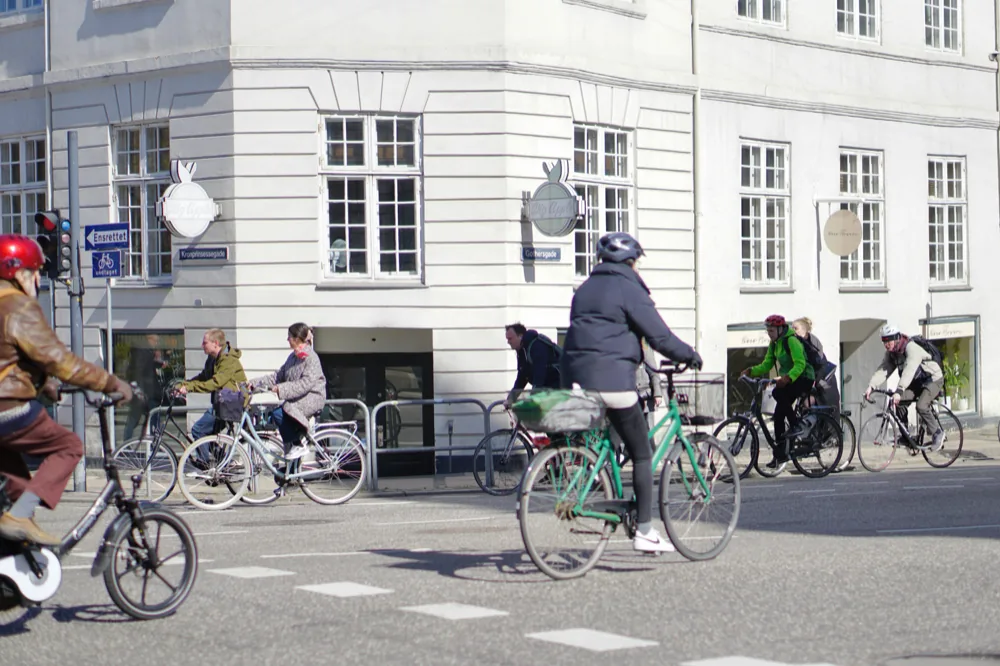
What work is like
37 hours a week, 5 weeks of paid holiday a year
- In most industries, the agreed working week is 37 hours. Overtime is usually paid extra or given back as time off.
- For each full month you work, you earn 2.08 days of paid holiday, about 5 weeks a year. When you start a new job, you have not earned much holiday yet.
- Danish law has no minimum wage. Pay and conditions are set by a collective agreement: a standard agreed between trade unions and employers. The new work permit requires your job to be covered by a collective agreement.
- A trade union and an unemployment insurance fund (A-kasse) are two different organisations. You can join each one separately. To get unemployment benefits if you lose your job, you usually must be a member of an A-kasse for 1 year first.
Sources: Life in Denmark (Danish government): working hoursLife in Denmark (Danish government): holidayLife in Denmark (Danish government): the Danish labour market modelLife in Denmark (Danish government): unemployment benefits
How much pay you take home
About DKK 26,800 a month before tax, about DKK 18,100 after
- This estimate uses the lowest yearly salary allowed under the new work permit: DKK 322,000 (about $47,600). Tax and other deductions take about 33%.
- You take home about DKK 18,100 (about $2,676) a month.
- Your payslip first takes off an 8% labour market contribution (a tax on pay), then income tax. Tax rates are different in each town.
- When you arrive in Denmark, get a tax card first. Without a tax card, your employer will take 55% of your pay in tax.
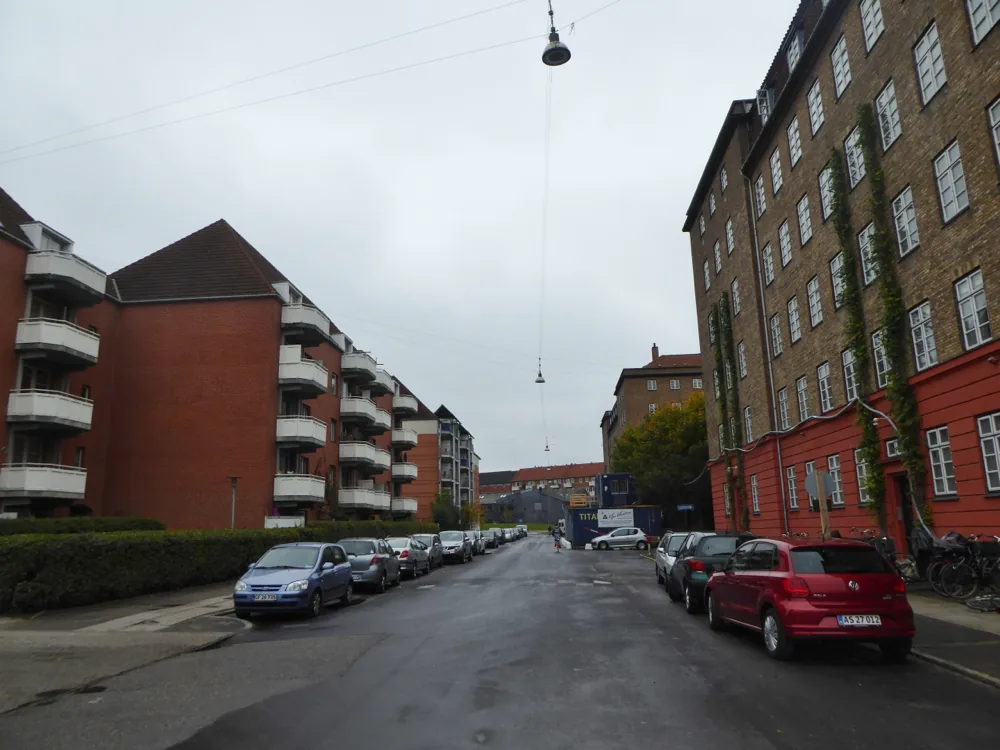
Where to live and what it costs
Renting can cost up to 6 months of rent before you move in
- A landlord can ask for a deposit of up to 3 months' rent, plus up to 3 months' rent paid in advance. The first month's rent is paid on top of this.
- If you find damage in the home after you move in, tell the landlord within 14 days and take photos as proof.
- You need a real address before you can register for a CPR number (your Danish personal registration number). You need it for most things, like seeing a doctor or opening a bank account.
Sources: Life in Denmark (Danish government): renting a homeLife in Denmark (Danish government): International Citizen Service
What to do when you are sick
Once you are registered, your family doctor is free
- After you register your address, you get a yellow health card. It shows the name of your family doctor. When you are sick, go to this doctor first. If needed, the doctor sends you to a hospital.
- Seeing your family doctor is free, but not everything is free. Adults pay part of the cost at the dentist.
- In an emergency, call 112.
Sources: Life in Denmark (Danish government): healthcare when working in Denmark

How cold is Denmark
January average 1.6 °C, July average 16.9 °C
- In winter the average temperature is around 0 °C. It is not extremely cold.
- The hard part is that it is grey and dark: January has only about 52 hours of sunshine in the whole month, less than 2 hours a day on average.
- Around the shortest day of the year in December, it gets light in Copenhagen after 8:30 in the morning and dark after 3:30 in the afternoon. There are only about 7 hours of daylight.
- Summer is cool. In July and August the average temperature is around 17 °C, and it gets dark very late in the evening.
- It rains often in every season. Rain or snow falls on about 174 days a year. You need rain gear and a windproof jacket.
- These are national averages, worked out by DMI (the Danish weather service) from 30 years of records. Each year can be warmer or colder.
Sources: DMI: January 2020 report, with 1991–2020 normals (in Danish)DMI: July climate normals 1991–2020 (in Danish)DMI: climate normals for Denmark (in Danish)DMI (Danish weather service): the shortest day of the year (in Danish)
What happens if you lose your job
Your permit depends on your job
- Under the current work permit rules, your residence permit is tied to this one job. If you lose the job, you must tell SIRI (the Danish immigration agency), and your residence permit will be taken away.
- To change jobs, you must apply again with the new job.
- The detailed rules on this for the new scheme are not published yet. We will update this page when SIRI publishes them.
Sources: SIRI (Danish immigration agency): if you lose or change your job
Done reading? Test yourself
Two short quizzes. After each question you see the explanation right away.
- First-month quizFrom registering when you arrive to your first payslip: 12 situations.About 5 minutes
- Danish mini-testThe words you will meet first at work and in daily life. How many do you know?About 3 minutes
- Can I go?Now that you know Denmark, check if you meet the conditions to apply.About 3 minutes